
WeChat Pay: What It Is and How Foreign Merchants Can Accept It
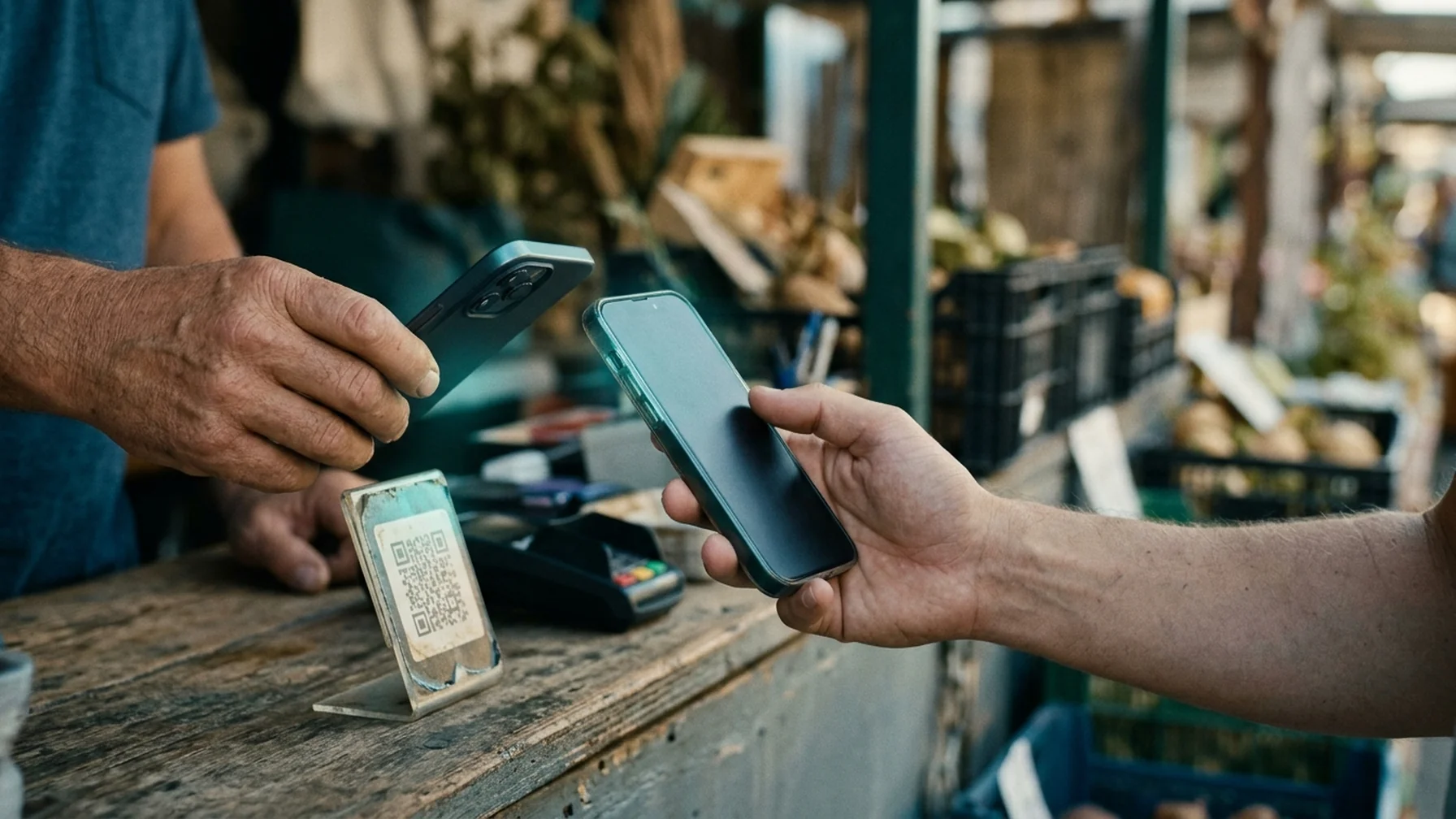
WeChat Pay is the payment function inside WeChat, the messaging and social app built by Tencent. Users link a bank card or top up a balance, then pay by scanning a QR code, showing a barcode, or confirming inside the app. For a foreign merchant, it is a way to accept money from Chinese customers who rarely use cards or international wallets. Accepting it usually means going through a payment provider rather than contracting with Tencent directly.
What WeChat Pay actually is
WeChat started as a chat app and grew into a place where people message, read news, book services and pay. WeChat Pay sits inside that flow. A payment is a transfer from the user's funded wallet or linked card to a merchant account, confirmed by the app.
Two versions matter to merchants. WeChat Pay in mainland China runs on the domestic system and settles in Chinese yuan. WeChat Pay for cross-border business lets overseas merchants accept payments from mainland users, often settling in another currency through an acquirer. They are not the same product, and the rules differ.
Most customer payments happen in one of four ways:
- Merchant-presented QR code: the customer scans a code at the counter or on a website and confirms the amount.
- Customer-presented code: the customer shows a barcode in the app, and the merchant's scanner reads it.
- In-app payment: a purchase made inside a WeChat mini program or an official account.
- Online checkout: a WeChat Pay option on a website or app, usually opened through the app on a phone.
The wallet is funded from a Chinese bank card or a balance. That is the main limit for your customers: a WeChat Pay user generally needs a Chinese bank account, so the audience is mostly people in mainland China, not the global Chinese diaspora.
Why WeChat Pay matters for merchants selling to Chinese customers
WeChat has a very large user base in mainland China, and paying inside the app is ordinary there. A customer who is used to scanning a code may abandon a checkout that only offers international card fields. Adding WeChat Pay removes that friction for the customers who have it.
The gain is narrow, though. If your buyers are outside mainland China, WeChat Pay will rarely help. Check where your traffic and orders come from before you build for it. The wallet works best for merchants with a clear Chinese customer base: travel, retail near tourist routes, education, digital services or cross-border e-commerce aimed at mainland shoppers.
How WeChat Pay for merchants works in practice
Direct integration with Tencent is generally limited to entities registered in mainland China with the right business licences. Most foreign merchants reach WeChat Pay through a payment service provider or acquirer that already has the connection. The provider handles onboarding, currency conversion and settlement to your bank account.
Steps to get set up
- Confirm demand first. Look at order data and customer messages. If mainland Chinese customers are a small share, the setup cost may not pay back.
- Choose a provider. Compare acquirers and gateways that list WeChat Pay cross-border. Ask which countries they onboard, what currencies they settle, and how refunds and chargebacks work.
- Prepare company documents. Expect to supply business registration, proof of address, director identity documents, your website or app details, and a description of what you sell. Requirements vary by provider and jurisdiction.
- Pass compliance checks. Providers screen for prohibited goods and services and check that your business is legitimate. Expect questions about your customers and your refund policy.
- Integrate the payment method. Use the provider's hosted checkout or API. Test the full flow on a phone with WeChat installed, including a failed payment and a refund.
- Go live and reconcile. Match provider settlement reports to your own orders. Note the exchange rate applied and the fees deducted on each payout.
Timelines depend on the provider and on how quickly you supply documents. A clean application with a straightforward product can move faster than one that needs extra review.
What it costs and what limits apply
Fees, minimum order values and settlement currencies are set by the provider, not by a single global rule. They vary by country, contract size and payment type. Ask for the all-in rate, including currency conversion, rather than the headline percentage. Limits on transaction size and daily volume also come from the provider and from Chinese regulatory rules, which change. Verify current terms with your provider and, where relevant, the official Tencent documentation.
A short illustrative example
Suppose a tour operator in Europe sells day trips to visitors from mainland China. Its card checkout converts poorly on mobile, so it adds WeChat Pay through a cross-border acquirer. The customer scans a QR code at checkout and confirms in the app. The acquirer converts the yuan payment, deducts its fee and settles euros to the operator's account on a set schedule.
The numbers here are illustrative only: at a 1,000 yuan order and a provider rate of a few percent plus conversion, the operator receives less than the full amount. The real figure depends on the contract. What matters is that the operator can now serve a customer group it was losing at checkout.
Common mistakes to avoid
- Assuming all Chinese customers use it. The wallet depends on a mainland bank account, so some overseas Chinese customers cannot pay with it.
- Ignoring the mobile flow. WeChat Pay is built around the phone. A desktop checkout that does not hand off to the app will fail.
- Forgetting refunds and disputes. Confirm how refunds return to the customer and who handles disputes before you launch.
- Overlooking currency conversion. The exchange rate on settlement can cost more than the stated fee.
- Skipping reconciliation. Without matching settlements to orders, small fee and rate differences go unnoticed.
- Treating it as a global wallet. WeChat Pay is not a substitute for cards or local methods in most markets.
Practical takeaway
WeChat Pay is worth adding when you have a real base of mainland Chinese customers and a mobile checkout they can reach. Start by checking demand, then pick a cross-border provider that onboards foreign entities, settles in your currency and explains refunds clearly. Budget for conversion costs, test the phone flow end to end, and reconcile every settlement. If your customers are mostly outside mainland China, spend the effort on the payment methods they actually use.
This article is general information, not financial, legal or tax advice.